
REST and REST APIs Explained for Modern Applications
APIs play a major role in how modern applications work. From mobile apps to cloud platforms, APIs allow systems to communicate and share data. Among all API styles, REST and REST APIs remain the most widely used across the internet.
REST provides a simple and reliable way to design APIs that scale well and work across different platforms. Because it uses standard web technologies, developers around the world continue to rely on them for building web services.
In this article, you will learn what REST is, how these APIs work, their core principles, advantages, limitations, and real-world use cases. By the end, you will have a clear understanding of why they are still important today.
What Is REST?
REST stands for Representational State Transfer. It is an architectural style used to design networked applications.
REST is not a protocol or a tool. Instead, it defines a set of rules that APIs should follow. These rules help make APIs simple, scalable, and easy to understand.
REST relies on standard web technologies such as:
- HTTP
- URLs
- Status codes
- JSON or XML
Because REST builds on existing web standards, it works well with browsers, servers, and cloud systems.
What Are REST APIs?
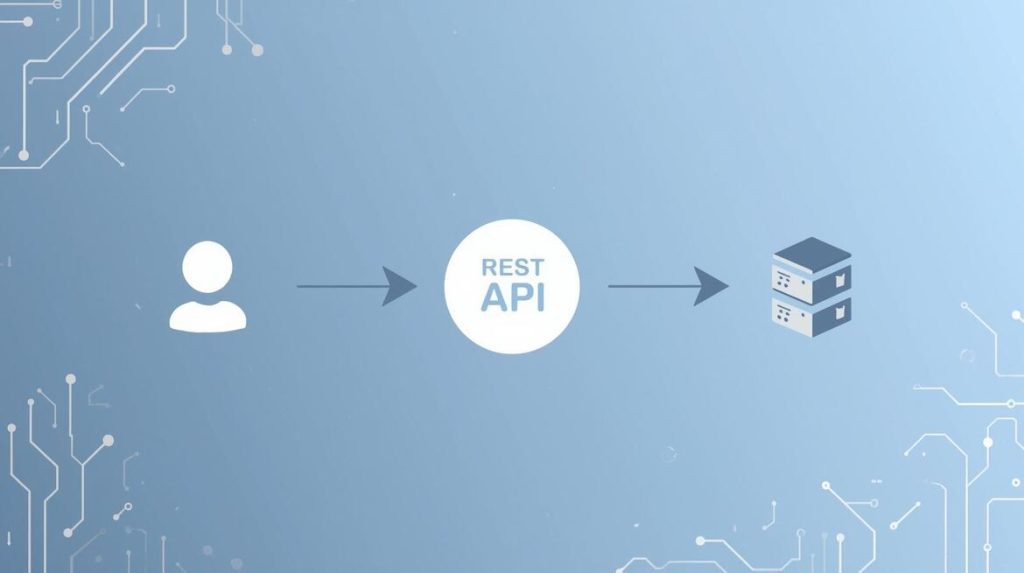
A REST API is an API that follows REST principles.
It allows clients, such as web or mobile apps, to interact with a server by sending HTTP requests. The server processes the request and returns a response that represents the current state of a resource.
For example:
- A client requests user data
- The server sends back a JSON response
- The client displays the data
This simple request-response model makes them easy to build and maintain.
Core Principles of REST
REST is based on six main principles. These rules guide how these APIs should be designed.
Client–Server Separation
REST separates the client and the server.
The client handles:
- User interface
- User interaction
The server handles:
- Data storage
- Business logic
This separation allows both sides to evolve independently, which improves scalability and flexibility.
Stateless Communication
They are stateless. Each request contains all the information needed to process it.
The server does not store client session data between requests. Because of this:
- Servers scale more easily
- Requests are easier to debug
- Failures are easier to handle
Statelessness is one reason they perform well at scale.
Resource-Based Design
In REST, everything is treated as a resource.
Resources are identified using URLs, such as:
/users/products/12/orders/5
Each resource represents data, and clients interact with these resources using HTTP methods.
HTTP Methods in REST APIs
They use standard HTTP methods to perform actions.
GET
Retrieves data from the server without changing it.
POST
Creates a new resource on the server.
PUT
Updates an existing resource completely.
PATCH
Updates part of a resource.
DELETE
Removes a resource from the server.
Using these methods consistently keeps them predictable and easy to use.
Use of Standard HTTP Status Codes
REST APIs rely on HTTP status codes to indicate results.
Common examples include:
- 200 – Success
- 201 – Resource created
- 400 – Bad request
- 401 – Unauthorized
- 404 – Not found
- 500 – Server error
These codes help clients understand what happened without extra explanation.
Data Formats Used in REST APIs
They commonly use JSON because it is lightweight and easy to read.
Other formats include:
- XML
- HTML
- Plain text
JSON remains the most popular choice due to its simplicity and wide support.
How REST APIs Work (Step by Step)
- The client sends an HTTP request to a URL
- The request includes method, headers, and optional data
- The server processes the request
- The server returns a response with data and status code
- The client uses the response
This clear flow makes them easy to debug and test.
Advantages of REST and REST APIs
They offer many benefits that explain their popularity.
Simplicity
They use familiar web concepts, which makes them easy to learn.
Scalability
Stateless design allows systems to scale smoothly.
Flexibility
REST works with many data formats and platforms.
Caching Support
REST supports HTTP caching, which improves performance.
Wide Adoption
Almost every programming language supports REST.
Limitations of REST APIs
Although REST is powerful, it has some limitations.
Over-Fetching
Clients may receive more data than they need.
Multiple Requests
Complex screens may require several API calls.
Fixed Responses
Clients cannot customize responses easily.
These issues become more noticeable in data-heavy applications.
REST APIs in Modern Applications
Despite newer alternatives, REST remains widely used.
They are common in:
- Web applications
- Mobile apps
- Cloud services
- Public APIs
- Enterprise systems
In data-driven platforms, they often work alongside optimized data pipelines like those described in ETL Process Optimization.
REST APIs and Security
Security is critical for REST APIs.
Common security practices include:
- HTTPS encryption
- API keys
- OAuth tokens
- Rate limiting
Security concepts discussed in Wireless Security Techniques also apply when protecting API traffic and authentication layers.
REST vs Other API Styles
REST is often compared to newer API styles.
Compared to GraphQL:
- REST is simpler
- GraphQL is more flexible
Compared to SOAP:
- REST is lighter
- SOAP is more rigid
REST continues to strike a balance between simplicity and power.
Best Practices for Designing REST APIs
To build effective REST APIs:
- Use clear and consistent URLs
- Follow HTTP method rules
- Return meaningful status codes
- Handle errors properly
- Version APIs carefully
- Document endpoints clearly
Following these practices improves developer experience and long-term maintainability.
Future of REST APIs
They are not going away.
While newer technologies continue to grow, REST remains:
- Reliable
- Well-supported
- Easy to maintain
Many teams now combine REST with other approaches, choosing the right tool for each use case.
Final Thoughts
REST and REST APIs form the backbone of modern web communication. Their simplicity, scalability, and compatibility make them a strong choice for many applications.
Although they have limitations, they continue to power millions of services worldwide. When designed well, they remain efficient, secure, and easy to maintain.
Understanding REST helps developers build better systems and make informed architectural decisions.
FAQs
REST is a set of rules for building APIs that use standard web technologies like HTTP to exchange data between clients and servers.
A REST API allows applications to communicate with each other by sending requests and receiving structured responses, usually in JSON format.
Yes, these are widely used because they are simple, scalable, and supported by almost all platforms and programming languages.
They can be secure when they use HTTPS, authentication tokens, and proper access controls to protect data and users.