
What Is AI in Cloud Computing? Explained Simply
AI in cloud computing means using artificial intelligence services through cloud platforms to build smarter applications without owning heavy hardware. Instead of installing AI tools locally, users access them online using cloud infrastructure.
However, this topic is not just about definitions. The real value of AI in the cloud lies in how people actually use it to solve problems faster, cheaper, and at scale. Businesses, developers, and even solo creators now rely on cloud-based AI to automate work, analyze data, and improve user experiences.
In this article, you will not only understand what AI in cloud computing is, but also how to use it, where it helps most, and what mistakes to avoid.
Why AI Needs the Cloud
AI systems require three main things:
- Large amounts of data
- Strong computing power
- Continuous updates
Most local systems cannot handle these requirements efficiently. This is where cloud computing becomes essential.
Cloud platforms provide:
- Flexible storage for big datasets
- On-demand computing power
- Easy scaling when demand increases
Because of this, AI models can train faster and perform better without manual infrastructure management.
How AI in Cloud Computing Actually Works (Step-by-Step)
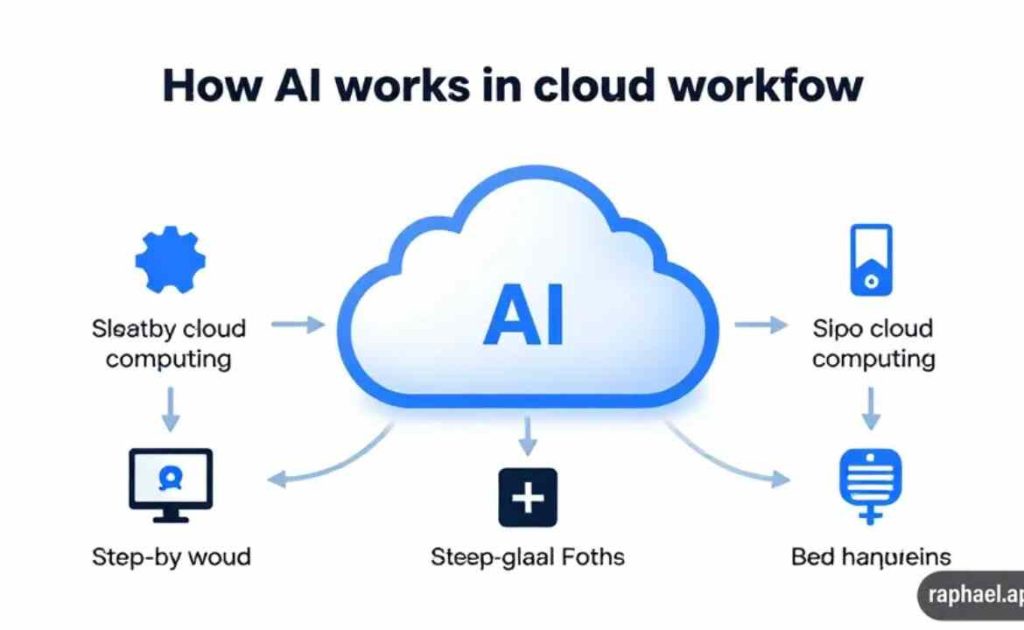
Many articles skip this part. Let’s break it down clearly.
Step 1: Data Collection
Data comes from apps, websites, sensors, user activity, or databases. This data is sent securely to cloud storage.
Step 2: Data Processing
The cloud cleans, organizes, and prepares the data. This step is critical because AI models depend on clean inputs.
This is where structured pipelines matter, similar to workflows explained in ETL Process Optimization, where data quality directly affects results.
Step 3: Model Training
AI models are trained using cloud-based machine learning services. These models learn patterns from the data.
Step 4: Deployment
Once trained, the model is deployed as an API or service. Applications can now use AI features in real time.
Step 5: Continuous Improvement
Cloud AI systems retrain models using new data, improving accuracy over time.
Types of AI Services in Cloud Computing
Cloud providers usually offer AI in ready-to-use formats.
Machine Learning Platforms
These platforms allow users to train, test, and deploy models without managing servers.
Used for:
- Predictions
- Classification
- Recommendations
Natural Language Processing (NLP)
NLP services help machines understand text and speech.
Used for:
- Chatbots
- Sentiment analysis
- Text summarization
Computer Vision
These services analyze images and videos.
Used for:
- Face detection
- Medical imaging
- Security systems
Predictive Analytics
AI models forecast trends based on historical data.
Used for:
- Sales forecasting
- Risk analysis
- Demand planning
Real-World Use Cases (Not Theory)
Let’s look at how people actually use cloud AI.
Businesses
Companies use cloud AI to automate customer support, personalize content, and optimize operations.
Developers
Developers integrate AI APIs into apps instead of building models from scratch.
Understanding APIs is easier when you already know concepts from REST and REST APIs, which many cloud AI services rely on.
Content Creators
Creators use cloud AI tools for:
- Writing assistance
- Image generation
- Video editing
Healthcare
Doctors use AI-powered cloud tools to analyze scans, predict risks, and manage patient data.
Education
Learning platforms use AI to personalize lessons and track student progress.
Benefits of AI in Cloud Computing (Practical View)
AI in the cloud is popular because it solves real problems.
Faster Setup
You can start using AI tools within hours instead of months.
Lower Cost
You only pay for what you use, which reduces financial risk.
Easy Scaling
Traffic spikes do not break your system.
Team Collaboration
Multiple teams can access AI tools remotely.
Regular Updates
Cloud providers handle updates and improvements.
Common Mistakes People Make
Many beginners struggle because of these mistakes:
- Uploading poor-quality data
- Ignoring security settings
- Overusing AI without clear goals
- Choosing tools without understanding costs
Avoiding these mistakes saves time and money.
Security and Privacy in Cloud AI
Security is a real concern, not a theory.
To stay safe:
- Encrypt sensitive data
- Limit access permissions
- Monitor AI outputs
- Follow compliance rules
Cloud AI is secure when configured properly. Poor setup causes most issues, not the technology itself.
AI in Cloud vs On-Premise AI
| Feature | Cloud AI | On-Premise AI |
|---|---|---|
| Cost | Pay-as-you-go | High upfront |
| Scalability | Easy | Limited |
| Maintenance | Provider-managed | User-managed |
| Accessibility | Global | Local |
For most users, cloud AI is the smarter choice.
How Beginners Can Start Using Cloud AI (Actionable)
If you are new, follow this path:
- Identify a simple problem (chatbot, prediction, automation)
- Choose one cloud AI service
- Start with free or trial plans
- Test with small datasets
- Improve step by step
Do not try to build everything at once.
Future of AI in Cloud Computing
The future focuses on:
- More automation
- Smarter AI assistants
- Better privacy controls
- Integration with edge devices
Cloud AI will become more user-friendly and more powerful at the same time.
Final Thoughts
AI in cloud computing is not just a trend. It is a practical solution that helps users build intelligent systems without complex infrastructure.
When used correctly, cloud AI saves time, reduces costs, and improves results. The key is understanding how to use it, not just what it is.
Readers who learn and apply these steps can build smarter projects and scale faster.
FAQs
AI in cloud computing means using artificial intelligence tools and services through cloud platforms to analyze data, automate tasks, and make predictions.
Companies use cloud-based AI because it is scalable, cost-effective, and easy to deploy while offering powerful computing resources.
Cloud AI is secure when proper encryption, access control, and compliance measures are followed, along with provider security standards.
Yes, cloud platforms make AI affordable and accessible, allowing small businesses to use advanced AI tools without heavy infrastructure costs.