AI-Native Development Platforms 2026: What You Need to Know
By 2026, software development is undergoing a fundamental shift. Rather than adding artificial intelligence as an afterthought, many new development environments are AI-native meaning AI isn’t a plugin or optional feature; it’s part of the core architecture. These platforms streamline everything from app creation to testing, deployment, and even ongoing optimization, making them vastly more productive than traditional development tools. AI-native development platforms 2026 combine AI components such as model integration, prompt engineering tools, vector databases, and automated workflows into unified environments that support the full lifecycle of application creation. As a result, developers can focus more on ideas and logic rather than boilerplate code and infrastructure setup.
What Does “AI-Native” Really Mean?
An AI-native platform is designed from the ground up to treat artificial intelligence as a first-class citizen, not just an add-on feature. This means that AI capabilities are embedded throughout the development workflow from generating code and building user interfaces to optimizing inference performance and managing deployed models. In contrast, traditional platforms typically require developers to integrate AI via plugins or external APIs, which can introduce complexity and inefficiency.
For example, instead of writing every line of code yourself, an AI-native platform might automatically create or refine parts of your codebase based on high-level prompts or user behavior data a concept similar to how AI can boost content creation efficiency discussed in what is AI in cloud computing, where intelligent systems improve developer and creator productivity.
Key Features of AI-Native Development Platforms
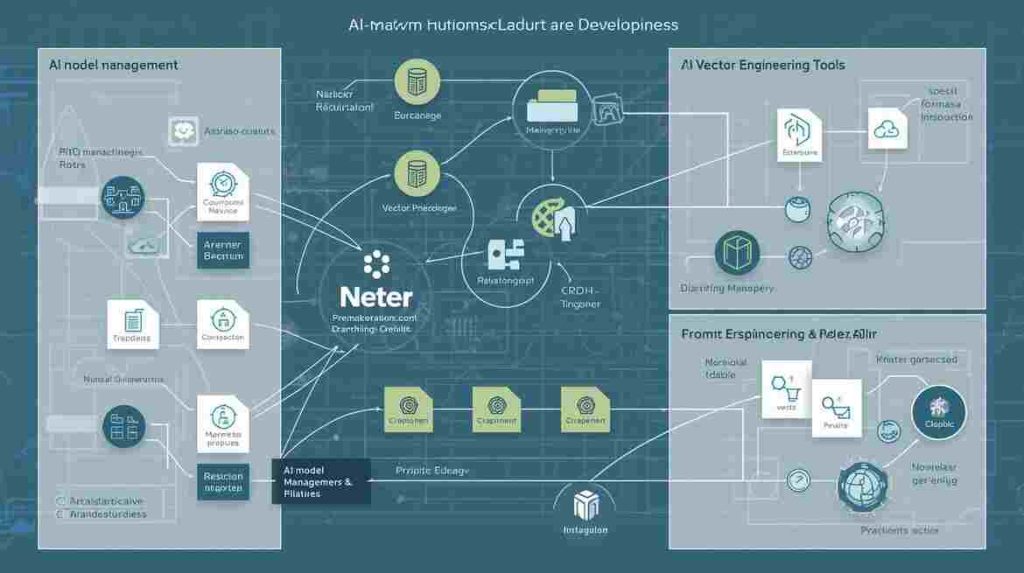
As AI-native platforms mature, several core features have become common across the best tools in 2026:
1. Built-in AI Model Management
AI-native platforms support managing multiple AI models from training and versioning to deployment and monitoring all within the same environment. This eliminates the need to stitch together separate tools for model lifecycle management.
2. Prompt Engineering Tools
Instead of treating prompts as standalone text inputs, AI-native environments offer visual prompt editors, template libraries, and optimization tools. These help developers craft effective instructions for models and test prompt performance systematically.
3. Vector Database Integration
Modern AI apps rely on semantic search, recommendation systems, and retrieval-augmented generation (RAG). AI-native platforms often include native support for vector databases like Pinecone, Weaviate, or Qdrant, ensuring structured and fast access to semantic data.
4. Automated MLOps Pipelines
AI-native tools embed MLOps best practices by default. They automate building, testing, and deploying AI models, reducing the need for separate DevOps solutions and minimizing friction between data science and software teams.
5. Real-Time Inference and Scaling
These platforms optimize real-time inference workflows with elastic compute, caching mechanisms, and multi-provider support. Thus, applications can scale without performance bottlenecks.
6. Seamless Multi-Model Support
Instead of forcing a single model choice, AI-native platforms often allow developers to mix and match models (e.g., different providers or capabilities) depending on the task.
Why AI-Native Development Platforms Matter Now
There are several reasons AI-native platforms are gaining traction in 2026:
Accelerated Time to Market
By automating repetitive tasks and providing intelligent defaults, developers build full applications faster than with traditional stacks.
Lower Barrier to Entry
Non-technical users can describe application behavior in natural language, and the platform can generate usable code similar to no-code AI builder platforms, where describing your intent produces workable solutions.
Improved Maintenance and Adaptability
AI-native systems can adapt to changing data patterns automatically, optimizing performance without constant manual intervention.
Cost and Infrastructure Efficiency
Platforms optimize resource allocation for model training and inference, reducing waste and cost compared to traditional cloud deployments.
Examples of AI-Native Platforms and Tools
Here are some categories and specific tools shaping the AI-native ecosystem in 2026:
1. Full AI-Native Development Environments
These provide complete ecosystems for building, testing, and deploying AI applications:
- Natively — Generates exportable, production-ready code from plain text descriptions for iOS and Android apps.
- Base44 — Natural-language web and app builder that turns conversational prompts into deployed applications.
2. AI Assistant and Agent Platforms
Platforms where AI agents help automate tasks and workflows are emerging as key components of AI-native workflows:
- Frontier by OpenAI — A platform for building and deploying AI agents that act as “AI co-workers,” collaborating with human teams.
- GitHub’s Agent HQ — Integrates multiple AI coding agents to assist in issue resolution and development workflows.
3. Integrated AI Tools in Traditional IDEs
Traditional development tools are also evolving with native AI capabilities:
- Xcode 26.3 — Brings deeper AI integration for coding and testing tasks.
AI-Native vs Traditional Development Platforms
It’s important to understand how AI-native platforms extend beyond mere “AI-enabled” capabilities:
- AI-Enabled Platforms often add AI modules on top of existing tools. These tools help with specific tasks like code completion or chatbot integration.
- AI-Native Platforms treat AI as a foundational element embedded in every stage of development from architecture and data pipelines to tooling and delivery.
Thus, adopting AI-native methods helps teams transition from building isolated AI features to developing intelligent systems that can evolve autonomously.
How to Choose an AI-Native Platform

When selecting a platform in 2026, consider these criteria:
Project Goals:
Determine whether you need rapid prototyping, full production readiness, or long-term scaling.
Model Support:
Choose platforms that allow flexible options for provider models and custom AI integration.
Export and Ownership:
Some platforms let you export full source code, which is crucial if you want control over the final product.
Team Skill Level:
AI-native environments vary from visual, low-code interfaces to deep integration for experienced engineers.
Final Thoughts
AI-native development platforms are reshaping the software industry by putting intelligence at the core of the creation process. They empower developers and non-developers alike to build sophisticated, scalable, and intelligent applications with less friction than ever before.
As AI continues to mature, platforms that treat AI as a native feature not just an add-in will define the next decade of software innovation.
FAQs
An AI-native development platform is built with AI at its core, integrating model management, automated workflows, and real-time intelligence throughout the development lifecycle.
AI-powered tools add AI features to traditional systems, while AI-native platforms embed AI into every layer of design and functionality.
They are not replacing coding entirely but significantly lowering the barrier to complex app creation and accelerating development workflows.
Yes; many AI-native environments provide natural language interfaces that let non-technical users describe applications and generate code automatically.