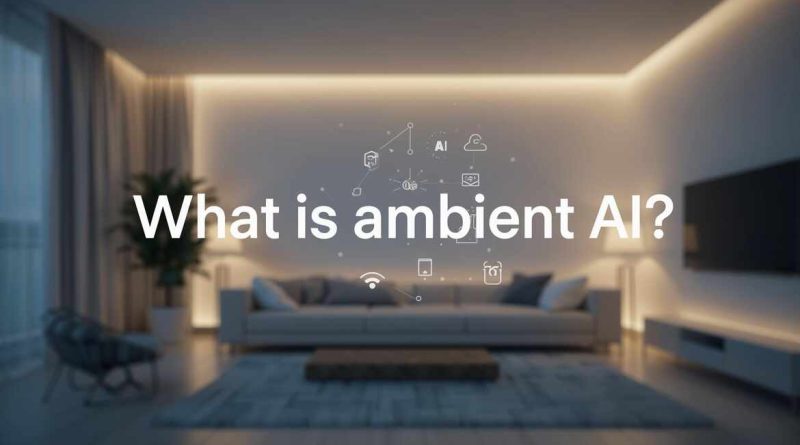
What Is Ambient AI? Meaning, Examples, and Uses
Ambient AI refers to artificial intelligence systems that work quietly in the background, understanding context and responding automatically without needing constant user input. Instead of asking users to click buttons, type commands, or issue voice prompts, it observes patterns, environment signals, and behavior to take helpful actions on its own.
In simple terms, it is AI that blends into everyday life. It does not demand attention. Instead, it supports people by acting at the right moment, in the right way, with minimal interruption.
As technology advances in 2026, background intelligence is becoming more common across homes, workplaces, healthcare, and digital services.
How Ambient AI Works
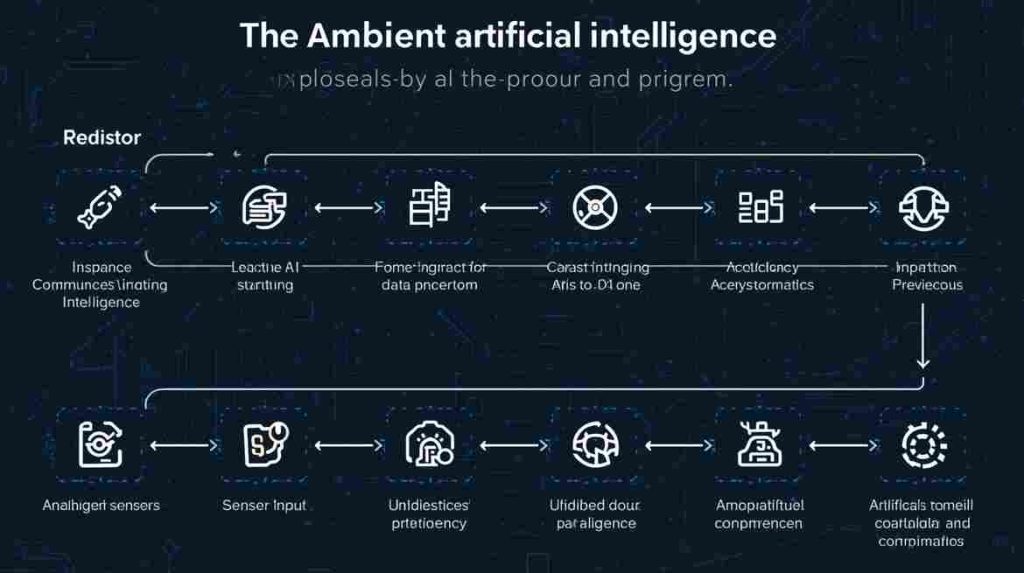
Ambient AI relies on a combination of data, sensors, machine learning, and context awareness. Rather than responding only to direct commands, it continuously analyzes signals from the environment.
These signals may include:
- Location data
- Time of day
- Device usage patterns
- Voice tone or movement
- System activity and history
Based on this information, the AI predicts what action may be useful next. For example, it may adjust lighting, suggest reminders, or optimize system performance automatically.
This approach closely connects with broader AI infrastructure concepts explained in what is AI in cloud computing, where intelligent systems process data continuously at scale.
Key Characteristics of Ambient AI
This environment-aware technology has several defining traits that separate it from traditional AI systems.
1. Context Awareness
It understands what is happening around it. Instead of isolated commands, it looks at the full situation before acting.
2. Minimal User Interaction
Users do not need to constantly interact with the system. Actions happen naturally, without disrupting focus.
3. Continuous Learning
Over time, this context-aware intelligence improves by learning preferences and habits. As a result, responses become more accurate and personalized.
4. Background Operation
Most importantly, it works quietly. It supports users without demanding attention.
Real-World Examples of Ambient AI

These passive intelligent systems already exists in many systems people use every day.
Smart Homes
Smart thermostats adjust temperature based on occupancy and time. Lights turn off automatically when rooms are empty. Music systems change volume depending on ambient noise.
Healthcare
Wearable devices monitor heart rate, sleep patterns, and activity levels. When something unusual appears, the system alerts users or healthcare providers without manual checks.
Workplaces
Meeting tools adjust audio levels automatically. Calendar systems suggest focus time based on work patterns. Security systems detect abnormal behavior without constant monitoring.
Digital Assistants
Modern assistants can suggest actions before users ask. For example, they may display boarding passes at the airport or suggest reminders based on routine.
These examples show how it improves convenience without increasing complexity.
Ambient AI vs Traditional AI
Traditional AI systems usually require direct input. Users must ask questions, press buttons, or initiate actions.
Ambient AI works differently.
| Traditional AI | Ambient AI |
|---|---|
| Responds to commands | Acts based on context |
| Requires user attention | Works in the background |
| One-time interactions | Continuous learning |
| Reactive | Proactive |
Because of this difference, this real-time contextual intelligence feels more natural and less intrusive.
Benefits of Ambient AI
It offers several practical advantages.
Improved User Experience
Since actions happen automatically, users spend less time managing technology. This leads to smoother, more natural interactions.
Increased Productivity
By reducing manual steps, this smart background system saves time. For example, systems can prepare tools before meetings or optimize workflows automatically.
Better Decision Support
This smart background system can surface insights at the right moment, helping users make informed decisions without information overload.
Accessibility Support
For users with disabilities, this AI embedded in daily life reduces the need for physical or verbal commands, making technology more inclusive.
Challenges and Risks of Ambient AI
Despite its benefits, ambient AI also raises important concerns.
Privacy Concerns
Because always-on intelligence continuously collects data, privacy becomes a major issue. Users must trust how their data is stored and used.
Transparency
Sometimes users may not know why an action occurred. Therefore, systems must explain decisions clearly when needed.
Over-Automation
If poorly designed, ambient AI may act incorrectly or too often. Balance is essential to avoid frustration.
Security Risks
Any system that runs continuously must be well protected. This links closely with broader security discussions such as wireless security techniques, where always-on systems require strong protection.
Where Ambient AI Is Headed in 2026 and Beyond
Ambient AI is evolving quickly. In 2026, we are seeing:
- Deeper integration with everyday devices
- Better personalization without manual setup
- Improved on-device processing to reduce data sharing
- Smarter ethical and privacy controls
As systems become more intelligent, AI that runs quietly will shift from convenience to necessity in many environments.
How Businesses Can Use Ambient AI
Businesses can apply invisible AI systems in many ways.
First, customer support systems can detect frustration and adjust responses automatically. Next, workplace tools can optimize schedules and resources without manual input. Finally, security systems can monitor risks continuously and respond faster.
However, businesses must design these systems carefully, ensuring transparency and user control remain priorities.
Final Thoughts
Ambient AI represents a shift in how people interact with technology. Instead of constantly commanding systems, users are supported quietly and intelligently in the background.
When designed responsibly, It reduces friction, improves efficiency, and enhances everyday experiences. As adoption grows, understanding how it works and how it affects privacy and control becomes increasingly important.
FAQs
It is artificial intelligence that works quietly in the background, using context and behavior to act without constant user commands.
Not always. Many systems process data locally or use limited signals, but privacy controls depend on how the system is designed.
It is common in smart homes, healthcare wearables, workplaces, and modern digital assistants.
Yes, many experts believe AI will move toward ambient systems because they feel more natural and less disruptive.