XRP Ledger Tokenization Growth Explained (2026)
Tokenization converting real-world assets into digital tokens is one of the biggest shifts in finance and blockchain technology in the 2020s. Instead of traditional systems that rely on paperwork and intermediaries, tokenized systems use blockchain for secure, efficient, and transparent ownership tracking.
Among various blockchain networks, XRP Ledger (XRPL) has emerged as a major player in the tokenization space. Its unique combination of speed, low costs, and built-in token standards has attracted developers, financial institutions, and digital asset innovators.
In 2026, the growth of tokenization on the XRP Ledger is accelerating faster than many expected. This article explains why that is happening, what benefits it offers, and how this trend may reshape global finance.
What Is Tokenization?
Tokenization refers to representing an asset such as currency, real estate, commodities, or even stocks as a digital token on a blockchain.
Instead of paper certificates or centralized databases, tokens live on decentralized ledgers where ownership and transactions are visible, secure, and auditable.
By tokenizing assets, holders can benefit from:
- Faster transfers
- Fractional ownership
- Lower costs
- Programmable features (like automated payouts)
The concept connects with broader trends in digital finance and decentralization, similar to how stablecoins like USD Coin (USDC) offer digital representations of currency.
Why XRP Ledger Is Ideal for Tokenization
Before we dive into growth trends, let’s explore why the XRP Ledger is well-suited for asset tokenization.
1. Built-In Token Functionality
Unlike some blockchains that require smart contract layers to issue tokens, XRPL has native token issuance capabilities. This means you can create tokens directly on the ledger without external contracts.
This reduces complexity, lowers risk, and makes it easier to issue new assets.
2. Speed and Scalability
XRPL processes transactions in 3–5 seconds with very low fees. This contrasts sharply with networks that experience delays and high gas costs during peak activity.
Speed matters for tokenized assets because trading and settlements must be fast especially when fractional ownership models become mainstream.
3. Decentralized Exchange (DEX) Integration
The XRP Ledger includes a built-in decentralized exchange. This allows tokenized assets to be traded directly on the ledger, without intermediaries. The result is:
- Better liquidity
- Open markets
- Lower trading costs
This native DEX differentiates XRPL from many other ecosystems that rely on external or third-party exchanges.
4. Sustainability and Efficiency
XRPL uses a consensus mechanism that is highly energy efficient compared to proof-of-work models. As asset tokenization expands globally, sustainability becomes a critical factor for institutional adoption.
Key Drivers of Tokenization Growth on XRP Ledger
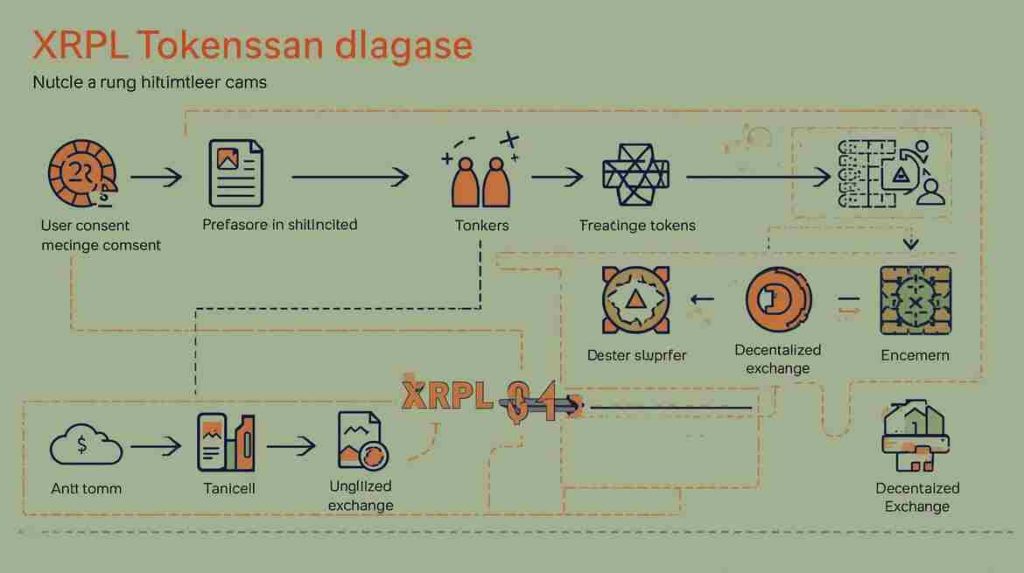
Multiple macro and micro trends are driving tokenization growth on XRPL in 2026:
1. Institutional Adoption
Financial institutions increasingly explore tokenized assets for:
- Faster settlements
- More transparent ownership
- Lower operational risk
Banks and regulated entities prefer networks with strong performance and security. XRPL fits this profile due to its mature infrastructure.
2. Increased Demand for Fractional Ownership
Traditional assets like real estate and fine art are difficult to divide into small parts. Tokenization changes that by enabling fractional ownership so more investors can participate.
XRPL’s low fees and fast transactions make fractionalization economically viable.
3. Growing Stablecoin Ecosystem
Stablecoins (digital versions of real world money) are essential for tokenized markets. XRPL hosts several stablecoins, including community and institutional issuances. Because stablecoins provide a bridge between traditional finance and digital assets, they accelerate token utility.
4. Regulatory Clarity
In many regions, regulators are developing frameworks for digital asset issuance and custody. As legal clarity improves, institutional confidence grows, contributing to tokenization expansion.
Real Use Cases of XRPL Tokenization
Here are concrete examples where XRP Ledger tokenization is making real impact:
1. Tokenized Securities
Companies can issue shares as tokens instead of paper certificates. This allows:
- Faster issuance
- Immediate settlement
- Lower issuance costs
- Global access
Tokenized securities also support secondary markets on XRPL’s built-in DEX.
2. Digital Real Estate
By tokenizing property assets, investors can buy fractions of high value real estate without large capital requirements.
This democratizes access to real estate investments and improves liquidity in traditionally illiquid markets.
3. Supply Chain Tokens
Assets like goods in transit or inventory can be tracked using tokenized representations on XRPL. This ensures:
- Transparency
- Traceability
- Reduced fraud
- Automated settlements
For businesses, this improves operational efficiency and reduces reconciliation errors.
4. Decentralized Finance (DeFi)
While XRPL is not traditionally a DeFi hub like Ethereum, tokenization enables several decentralized finance functions:
- Collateralized lending
- Token swaps
- Liquidity pools via DEX
- Synthetic asset issuance
Tokenized assets can interact with financial services without complex smart contracts, using XRPL’s simple and robust token model.
Benefits of Tokenization on XRP Ledger
Tokenizing assets on XRPL offers tangible benefits:
Lower Costs
Transactions and issuance fees on XRPL remain very low, making it economically viable for even small transactions.
Faster Settlement
Traditional financial markets can take days to settle. On XRPL, settlement happens within seconds.
Transparency and Auditability
Since all token transactions are visible on the ledger, audit trails become simpler and more reliable.
Global Accessibility
Tokenized assets on XRPL can be accessed by anyone with internet connectivity, providing broader market reach.
Risks and Challenges
Despite rapid growth, tokenization on any blockchain including XRPL must navigate challenges:
Regulatory Complexity
Different countries have varying rules for asset issuance, custody, and investor protections.
Custody and Security
Institutional adoption demands strong custody solutions for token wallets and compliance.
Interoperability
While XRPL is powerful, seamless interoperability with other blockchains and traditional systems remains a technical priority.
XRPL Tokenization vs Tokenization on Other Networks
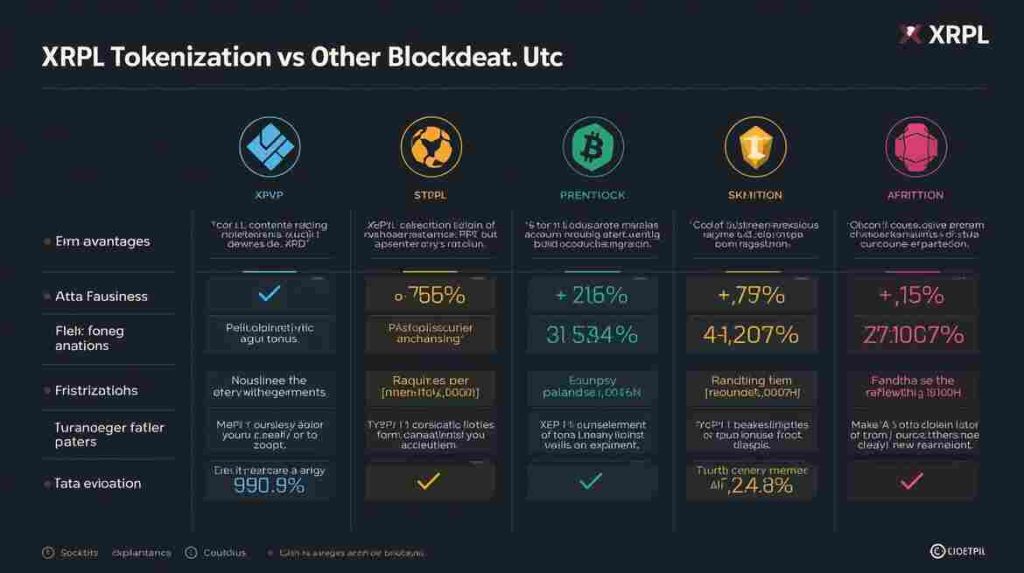
| Feature | XRP Ledger | Ethereum | Solana |
|---|---|---|---|
| Native token issuance | ✅ Built-in | ❌ Requires smart contracts | ❌ Requires smart contracts |
| Transaction speed | Fast (3–5s) | Varies | Fast |
| Fees | Low | High (variable) | Low |
| Built-in DEX | Yes | No | No |
| Energy efficiency | High | Lower (PoW / PoS transition) | Moderate |
This comparison shows why XRPL remains attractive for tokenization especially for real-world assets requiring speed, reliability, and low cost.
Future Outlook: 2026 and Beyond
Experts predict substantial expansion of tokenized markets in the next few years due to:
- Regulatory frameworks maturing
- Institutional exposure growing
- Stablecoins becoming mainstream
- Cross-chain interoperability solutions emerging
In particular, XRPL’s tokenization ecosystem may benefit from:
- Bridging solutions
- Compliance-friendly token standards
- Tokenized central bank digital currency (CBDC) pilots
- Institutional custody services
The future could see traditional financial instruments (like bonds, commodities, and equity) routinely tokenized and traded on blockchain networks like XRPL.
Final Thoughts
The growth of tokenization on the XRP Ledger reflects a broader shift in how digital and real-world assets are represented, traded, and managed. XRPL’s architecture with built-in token support, low fees, fast settlement, and native decentralization positions it as a strong contender in the future asset economy.
As regulatory clarity improves and institutional demand rises, tokenization will become the norm rather than the exception.
This trend is not a passing phase it is a structural shift that will define financial markets in 2026 and beyond.
FAQs
It’s the process of representing real-world assets as digital tokens on the XRPL blockchain, enabling secure, transparent ownership and transfer.
Because XRPL offers low fees, fast settlement, built-in token standards, and a native decentralized exchange all without the complexity of smart contracts.
Yes, users and institutions can issue tokens with proper authorization and compliance, as long as permissions and KYC rules are respected.
Almost any asset currencies, real estate, securities, commodities, or digital goods can be represented as tokens on XRPL.