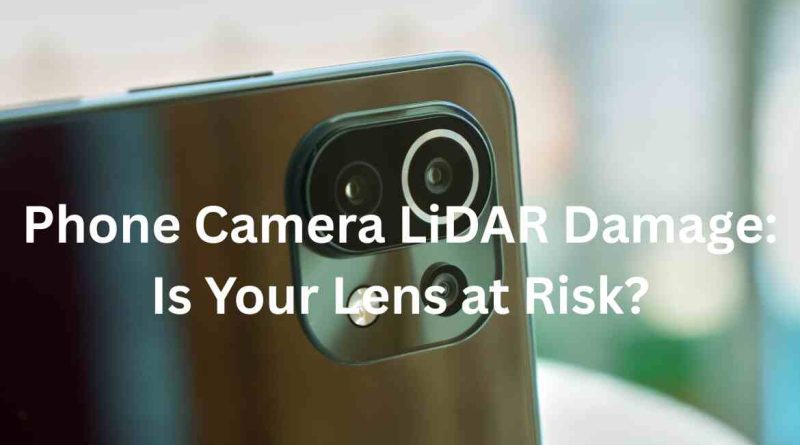
Phone Camera LiDAR Damage: Is Your Lens at Risk?
As LiDAR becomes a standard feature in modern smartphones, users are raising concerns about potential phone camera LiDAR damage. With infrared lasers now built into many devices, is your phone’s camera at risk?
This article explores how LiDAR works in phones, whether it can cause damage to the camera, and what precautions users should take.
What Is LiDAR and Why Is It Used in Phones?
LiDAR (Light Detection and Ranging) uses laser pulses to measure distance between the phone and surrounding objects. It’s used in smartphones like recent iPhones to enhance autofocus, improve depth mapping, and enable precise augmented reality features.
LiDAR integration has revolutionized smartphone imaging, especially in portrait mode and night photography. How does LiDAR work? This is particularly evident in devices where software-powered imaging combines with depth sensors for sharper results.
Can LiDAR Cause Phone Camera Damage?
Generally, built-in LiDAR does not damage your phone’s camera. Both the camera and LiDAR sensor are designed to work together in harmony. However, specific conditions could potentially affect performance:
- Prolonged overheating during intensive AR applications or long-term use of the LiDAR scanner could degrade sensor accuracy over time.
- Hardware impact such as a drop or shock can cause misalignment between the LiDAR module and camera lens, resulting in blurry or inaccurate image rendering.
- Unregulated third-party apps that overstimulate the LiDAR module might contribute to increased wear on internal components, especially on older devices.
Just as software and hardware must be tightly integrated in GPU systems like the Intel Arc B580, smartphone camera systems must maintain alignment and calibration to perform at their best.
What About External LiDAR Devices?

High-intensity external LiDAR units (such as those used in industrial or mapping equipment) can interfere with phone sensors if pointed directly at the camera for long durations. While most modern smartphone cameras have IR filtering, continuous exposure can impact autofocus or introduce temporary image noise.
In environments where multiple IR or RGB lighting systems are active, such as when using advanced lighting software like Signal RGB, sensor interference can occasionally degrade image quality or color fidelity.
Conclusion
The fear of phone camera LiDAR damage is largely misplaced. Built-in LiDAR in smartphones is safe and carefully engineered to operate alongside camera modules. However, environmental factors like heat, impact, and external interference can reduce sensor efficiency. As always, using your device responsibly and protecting it from physical damage remains essential.
FAQs
No, LiDAR sensors built into smartphones are designed to work alongside the camera without causing damage. They use low-powered infrared pulses that are safe for the phone’s internal components.
Physical impacts (like dropping the phone), overheating during extended AR sessions, or faulty third-party apps misusing LiDAR APIs can contribute to long-term wear or alignment issues.